


 The number of mobile stalls in the popular markets of Idlib decreased - May 13, 2025 (Enab Baladi/Samah Alloush)
The number of mobile stalls in the popular markets of Idlib decreased - May 13, 2025 (Enab Baladi/Samah Alloush)
Idlib – Samah Alloush
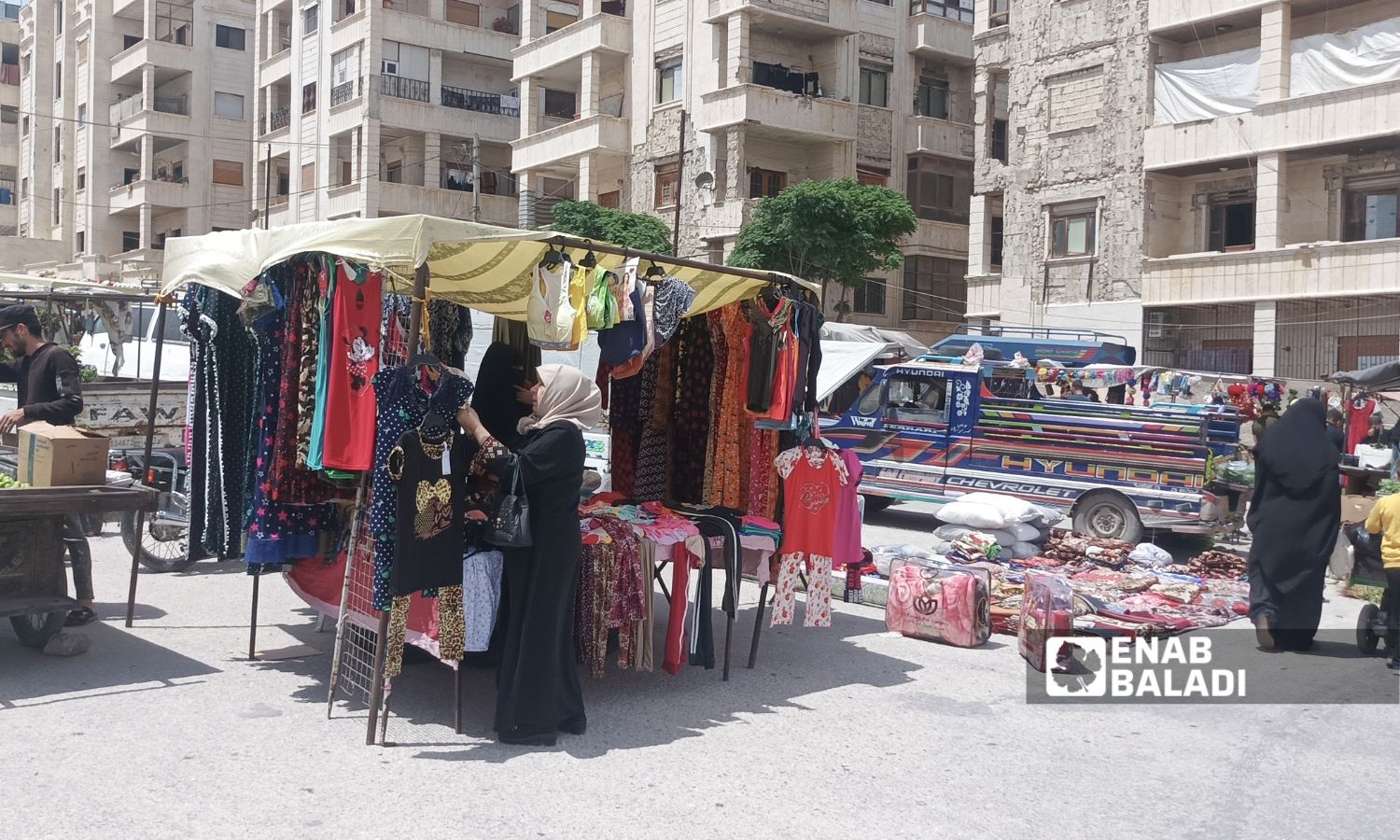
With the rise in temperatures, Rawda Mustafa carried her cloth bag and headed early to the mobile market (bazaar) on 30th Street in Idlib city, aiming to buy her four children cotton clothes from the used clothing stalls suitable for the summer heat. However, she was surprised by the spike in prices and the reduced number of stalls as the summer season began.
Rawda could not find what she needed in the mobile market, as the used clothing stalls sold second-hand items depending on their cleanliness, with clothing prices previously ranging between 10 Turkish lira (2200 Syrian pounds) and 20 Turkish lira. This season, however, prices had doubled, with average quality and fewer items available.
Rawda told Enab Baladi that the number of stalls has decreased, and the market no longer witnesses the crowd it used to have. The demand is now focused on vegetable sellers and cleaning supplies.
According to Enab Baladi’s observations, the number of stalls in the mobile popular markets has declined after being widespread across various neighborhoods in Idlib city, where sellers showcased their diverse merchandise, including used and new clothing, cleaning supplies, household items, toys, and food items.
The stalls, which were once a destination for residents and catered to many of their needs, have dwindled, particularly for those living far from the main market.
Kareema (also from Idlib) expressed her regret over the departure of some vendors and her struggles to secure her needs. She used to purchase high-quality spices and essential goods at reasonable prices from a seller who decided to leave the bazaar and return to his hometown in southern Idlib to settle again.
After a tour of the European second-hand clothing stalls (bale), most vendors agreed that price increases were a result of their inability to buy large quantities due to rising customs fees imposed on imported products.
Some stall owners mentioned that they used to collect clothing that remained unsold in larger stores and sell it at lower prices. However, those prices have also increased, making it challenging to find new merchandise at affordable prices that meet customer needs, which led some to abandon their work and search for other products to sell.
Regarding the prices of new clothing available in the bazaars, they tend to be lower than those found in main markets, as the owners sell with lower profit margins due to not being tied to shop rents and other expenses; their quality is average.
Despite this, there is a lack of interest from residents in the new clothing found in the bazaars, as stated by Omar al-Hajj, the owner of one of the stalls.
Abdul Malik Hamdo, the owner of a household goods stall, noted that the number of vendors has decreased due to some returning to their villages and towns after years of displacement.
He mentioned that there used to be a rush to choose appropriate spots to display their goods, but now the number has diminished, and some products have disappeared due to their owners returning to their hometowns.
Moreover, the continuous rise in product and goods prices has resulted in losses for stall owners who depend on small capital and limited profits, making it impossible for them to recover their losses. Consequently, some have started looking for other sources of income that do not require significant capital.
Ahmed, a stall owner specializing in accessories and beauty products, commented that mobile markets still exist despite the reduced number of stalls, as residents in each neighborhood have become accustomed to the vendors, creating a sense of familiarity between them.
He noted that most of the vendors are displaced, and any funds they previously saved to purchase merchandise must now be invested in rebuilding their destroyed homes and restoring their lands in rural areas, after the previous ruling regime had cut down trees, rendering the lands barren and lifeless.
Despite the decrease in their number and the decline in their operations and products, the mobile bazaars remain a refuge for those with limited income, as they provide products that meet a portion of their daily needs. The decline of these markets negatively affects them, given the high cost of living and rising prices in markets that do not align with their purchasing power.
if you think the article contain wrong information or you have additional details Send Correction


 A
A
A
A
A
A




 More Society