

Syria’s Planning and Statistics Authority has announced the launch of a 45-day labor force survey across the country’s governorates, in cooperation with the International Labour Organization (ILO) and the European Union.
The annual national survey aims to provide accurate data on the labor market and measure employment and unemployment rates using a scientific methodology, collecting data from a representative sample of Syrian households.
Survey Objectives and International Standards
The survey aims to determine the size of the labor force, examine its demographic and economic distribution, identify the causes of unemployment, and anticipate future needs to align educational outcomes with market requirements and develop training programs. These efforts are intended to guide the development and use of human capital and improve future employment opportunities.
To ensure accurate, reliable data and allow international comparisons of its indicators, the authority is using the international technical standards adopted by the 21st International Conference of Labour Statisticians (ICLS-21).
The authority urged households to cooperate and provide accurate answers, noting that its field teams carry official identification cards.
It also stressed that all data provided would remain strictly confidential, would be used solely for statistical purposes, and would not be shared for any other purpose. It said members of the public could use its official channels to ask questions or verify the identities of survey staff.
A Strategic Asset for Labor Market Recovery
Web science and data management specialist Mohammad Tawfiq Nahlawi told Enab Baladi that data science experts classify statistical surveys as intangible strategic assets that underpin development policies and reduce their risks and costs.
Syria’s labor force survey is among the most important of these assets, according to Nahlawi, because it maps the distribution of human capital, labor force participation rates, and skills gaps resulting from years of demographic and economic disruption.
Regular Statistical Surveys as a Condition for Recovery
Nahlawi stressed that data is the “silent engine” of recovery and reconstruction. International companies and investors do not commit capital to environments they know little about, he said. They first seek reliable indicators of labor market efficiency, operating costs, and the availability of skills.
He added that conducting the survey according to the ILO’s latest statistical standards gives its findings additional value by allowing regional and international comparisons, reintegrating Syria into the international system of reliable, standardized government data.
However, Nahlawi noted that the value of this asset depends on keeping the data up to date. Like other assets, data quickly becomes outdated unless it is updated regularly.
He recommended maintaining regular surveys and building continuous time series, describing this as the only way to provide economic planners and decision-makers with an accurate guide for allocating resources effectively. The Planning and Statistics Authority is committed to this approach through the preparation and implementation of several standardized surveys in cooperation and coordination with international partners.
Damascus Discussions on Assessing Human Capital
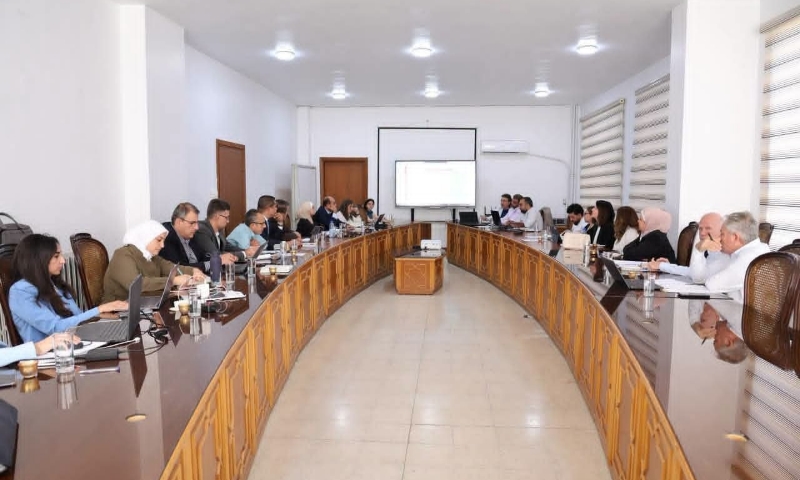
On October 17, the Planning and Statistics Authority, in cooperation with the German development agency GIZ and implementing partner ME Consulting Solutions (MECS), held a specialized workshop at its Damascus headquarters to discuss a study titled “Assessing Human Capital and Economic Recovery in Syria.”
The workshop included a comprehensive review of the rationale and concept behind human capital assessment and the scientific methodology used to prepare the study.
Discussions also focused on data collection mechanisms, sampling strategies, and respondent characteristics, as well as data structure, information management, and the methods used to control quality and ensure accurate findings.