
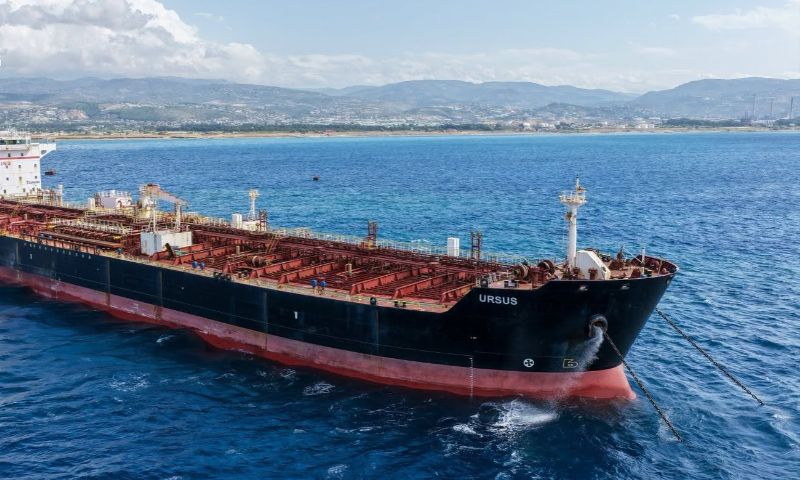

The arrival of the first tanker carrying 63,000 tons of diesel at the Baniyas oil terminal on Syria’s Mediterranean coast marked the beginning of the implementation of an agreement between the Syrian Petroleum Company and Saudi Arabia’s Aramco.
The shipment was delivered under an agreement between the two companies, with credit facilities provided by US bank JPMorgan. The arrangement offers financial backing, while the proximity of Saudi Arabia and Syria and the availability of land and sea transport routes are important considerations in transportation costs.
While the agreement covers part of the domestic market’s needs, an economist who spoke to Enab Baladi said its impact could extend to reducing import costs, expanding supply options and strengthening the Syrian banking sector’s ability to conduct international transactions.
Beyond Meeting Domestic Demand
Economist Majdi al-Jamous told Enab Baladi that the agreement’s significance goes beyond importing petroleum products to address part of the domestic shortage. He said it also carries financial and economic implications related to how payments and banking transactions associated with the deal are processed.
Al-Jamous estimated Syria’s daily needs for oil and petroleum products at between 250,000 and 300,000 barrels. According to his estimates, Saudi supplies could cover the equivalent of 50,000 to 60,000 barrels per day, or approximately 20% to 30% of demand.
A Gateway to the International Financial System
Al-Jamous said the agreement’s most significant aspect lies in the ability of Syrian institutions to process related payments through international banking channels, potentially marking a step toward reintegrating Syria’s financial sector into the global payments system.
According to al-Jamous, payments were processed through bank transfers and documentary letters of credit, coordinated between the Central Bank of Syria and a major US bank, JPMorgan. He considered the completion of these transactions a positive indication that the isolation experienced by Syria’s banking sector could begin to ease.
He added that continuing such measures could facilitate the issuance of letters of credit and the provision of bank guarantees required for foreign trade in the future.
Al-Jamous expected Syria’s financial authorities to continue addressing concerns related to anti-money laundering and counterterrorism financing systems, which could improve Syrian banks’ ability to deal with international financial institutions.
Closer Supplies and Lower Transportation Costs
On the operational side, al-Jamous said the relatively short distance between Saudi Arabia and Syria, along with available land and sea transport options, could help stabilize supplies and reduce shipping costs compared with more distant suppliers or routes facing logistical complications.
According to the economist, lower transportation costs could reduce the cost of importing petroleum products. However, any impact on domestic prices would depend on other factors, including pricing policies, taxes, subsidies, distribution costs and operating margins.
Al-Jamous also estimated that sustained supplies could stimulate service sectors linked to transportation, storage and distribution, creating employment opportunities in logistics and supporting infrastructure.
Will Saudi Supplies Replace Russian Oil?
Al-Jamous ruled out Saudi supplies completely replacing Russian oil, arguing that diversifying import sources involves economic, political and security considerations.
He expected Syria to continue relying on multiple suppliers to meet its needs while working to increase domestic production, which he estimated at approximately 105,000 barrels per day, with efforts underway to raise output to 200,000 barrels.
Al-Jamous said having multiple suppliers could give Syria greater flexibility to compare prices, quality and supply terms while reducing the risks associated with dependence on a single source or potential supply disruptions.
He also anticipated an expansion of oil cooperation between Syria and Gulf countries, particularly with Aramco, alongside improvements in the country’s ability to import crude oil and refined products and greater efficiency in its energy sector.