Defense Ministry mine-clearance teams have begun clearing unexploded ordnance and explosive remnants of war from al-Hamamiyat (northern Hama countryside, central Syria) and its surrounding areas, responding to residents’ demands and seeking to reduce threats to their safety. Enab Baladi attended the operations on Monday, October 12
The engineering teams’ work followed protests organized by villagers demanding stronger efforts to clear mines and explosive remnants of war and remove rubble.
Uday al-Abdullah, director of public relations in the Defense Ministry’s Media Department, told Enab Baladi that the al-Hamamiyat area witnessed battles between military factions and the former regime’s forces and affiliated militias during the years of the revolution, particularly in 2016, 2017, and 2020.
The battles left large quantities of unexploded artillery shells and rockets, as well as minefields whose locations are not mapped.
Al-Abdullah added that, following Syria’s liberation, the Defense Ministry mobilized Military Engineering Department personnel to open roads and survey agricultural land, helping residents return to the area.
He explained that, more than a year later, the ministry received reports from al-Hamamiyat residents of mines and explosive remnants of war suspected to be concealed amid ruined homes and rubble. This prompted it to send bulldozers and mine-clearing vehicles to sweep suspected areas and remove debris, helping residents return, restore their farmland, and rebuild their homes.
Two Phases to Make the Village and Farmland Safe
According to the director of public relations in the Defense Ministry’s Media Department, work in al-Hamamiyat proceeded in two phases: opening the main roads and securing the area, followed by restoring agricultural land. He noted that explosive remnants of war beneath ruined homes and rubble continued to hinder the specialized teams’ clearance work.
He added that the difficulty of reaching these remnants had led the teams to use bulldozers to clear rubble, helping expose suspicious objects so they could deal with them.
Mohammed Hussein, a resident of al-Hamamiyat, told Enab Baladi that residents returned to the village immediately after liberation despite the widespread presence of explosive remnants of war, including cluster munitions and buried mines. These caused injuries and deaths, including among children and women.
Hussein added that explosive remnants of war had also killed livestock and damaged vehicles and property. He said residents had contacted the relevant authorities to demand their removal.
Hussein estimated that explosive remnants of war had killed around five or six people in the village and injured between 10 and 15.
Wael al-Khader, another al-Hamamiyat resident, told Enab Baladi that military engineering teams initially swept agricultural land before discovering that most of the antipersonnel mines had been planted between houses, leaving residents feeling unsafe within the village.
He said the engineering teams returned following residents’ appeals and began clearing mines and explosive remnants of war, expressing hope that their efforts would improve residents’ safety.
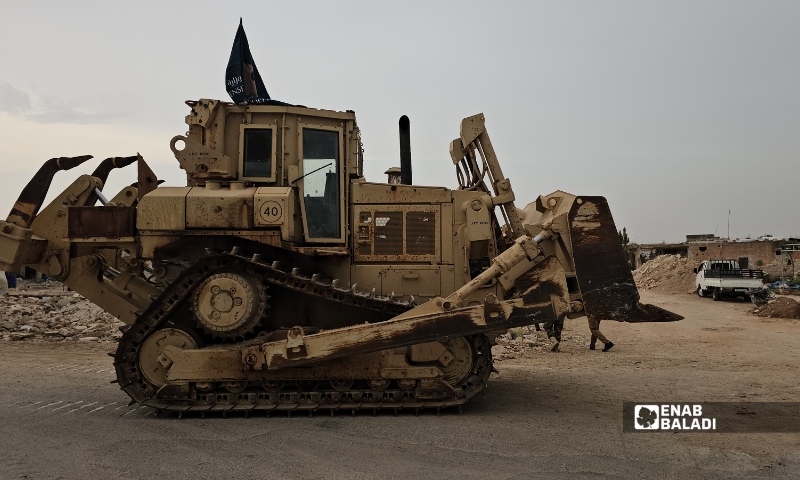
Defense Ministry mine-clearing vehicles remove mines and unexploded ordnance in al-Hamamiyat and surrounding areas in the Hama countryside, October 12, 2026 (Enab Baladi/Eyad Abdel Jawad).
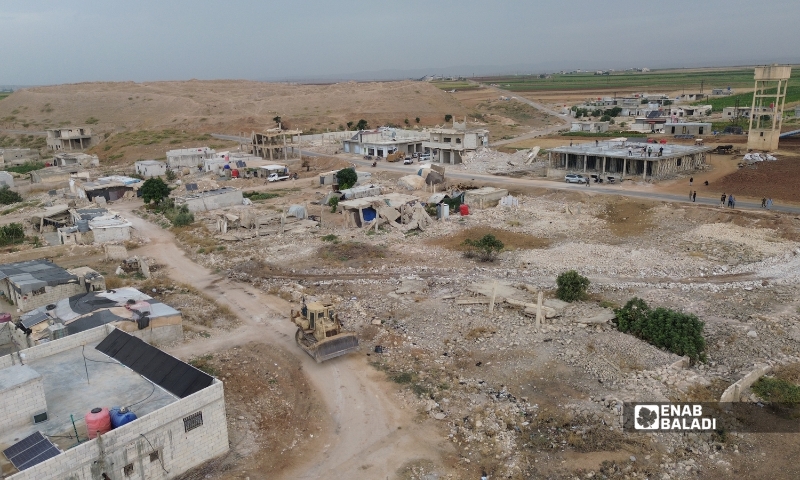
Defense Ministry mine-clearing vehicles remove mines and unexploded ordnance in al-Hamamiyat and surrounding areas in the Hama countryside, October 12, 2026 (Enab Baladi/Eyad Abdel Jawad).
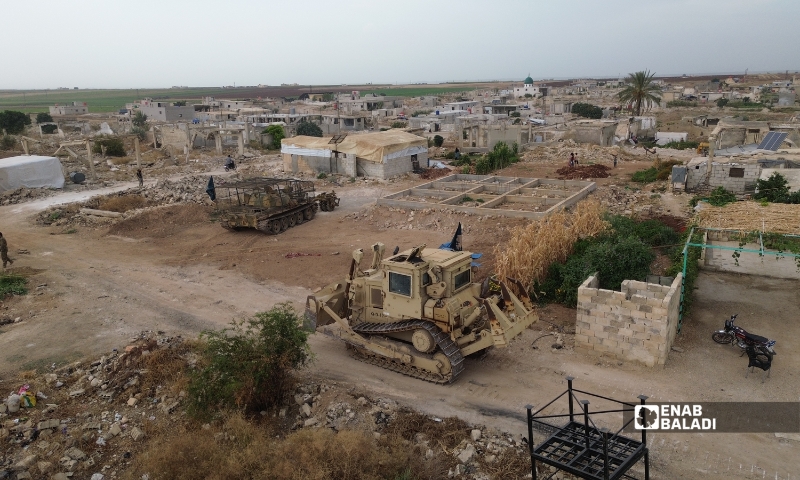
Tanks begin clearing mines and unexploded ordnance in al-Hamamiyat and surrounding areas in the Hama countryside, October 12, 2026 (Enab Baladi/Eyad Abdel Jawad).
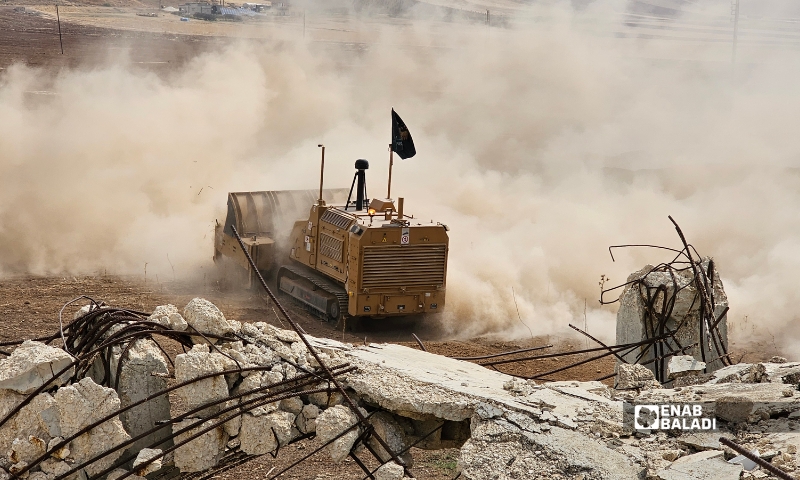
Defense Ministry mine-clearing vehicles remove mines and unexploded ordnance in al-Hamamiyat and surrounding areas in the Hama countryside, October 12, 2026 (Enab Baladi/Eyad Abdel Jawad).
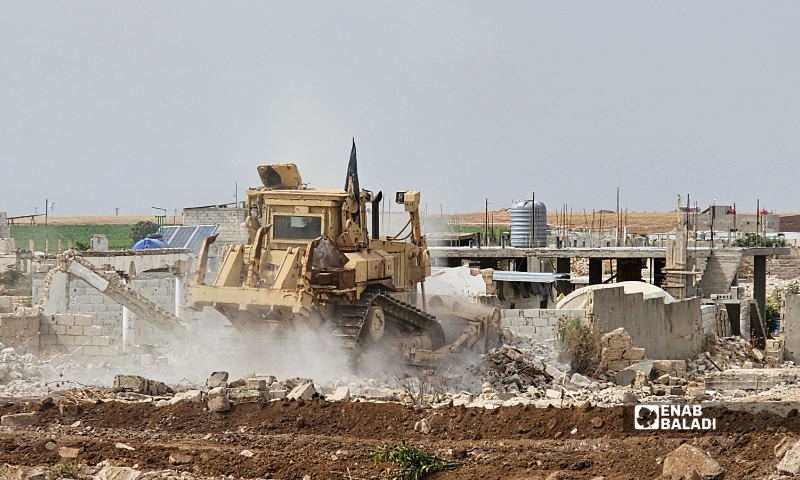
Defense Ministry mine-clearing vehicles remove mines and unexploded ordnance in al-Hamamiyat and surrounding areas in the Hama countryside, October 12, 2026 (Enab Baladi/Eyad Abdel Jawad).
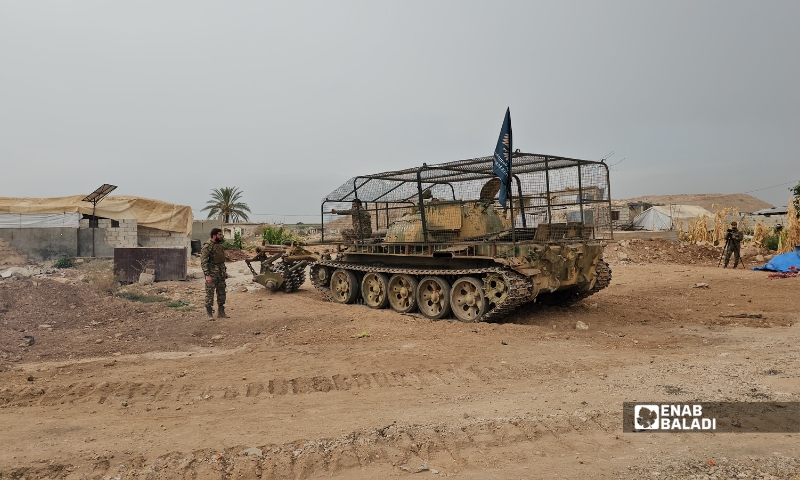
Tanks begin clearing mines and unexploded ordnance in al-Hamamiyat and surrounding areas in the Hama countryside, October 12, 2026 (Enab Baladi/Eyad Abdel Jawad).
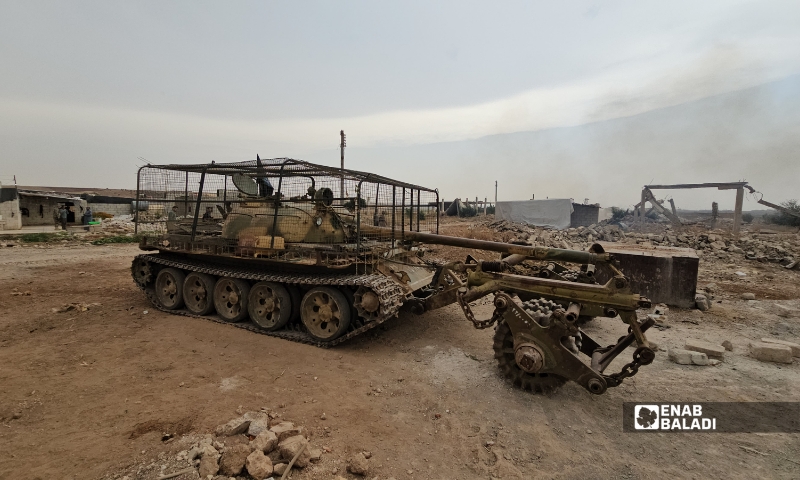
Tanks begin clearing mines and unexploded ordnance in al-Hamamiyat and surrounding areas in the Hama countryside, October 12, 2026 (Enab Baladi/Eyad Abdel Jawad).
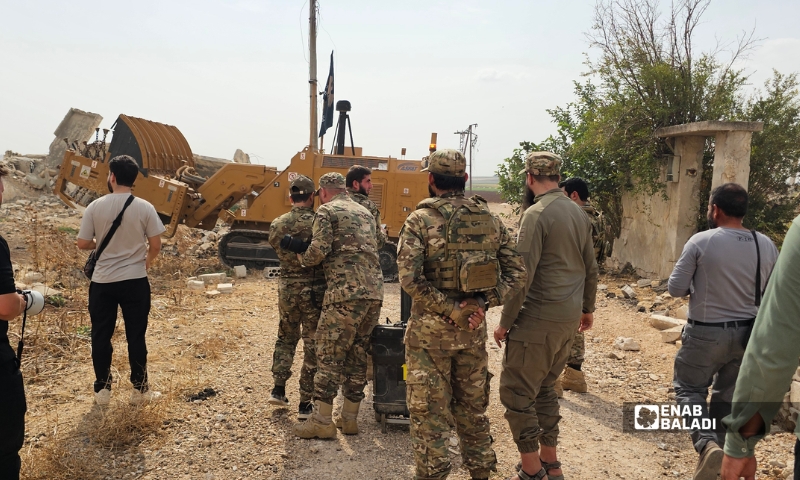
Defense Ministry personnel oversee the clearance of mines and unexploded ordnance in al-Hamamiyat in the Hama countryside, October 12, 2026 (Enab Baladi/Eyad Abdel Jawad).
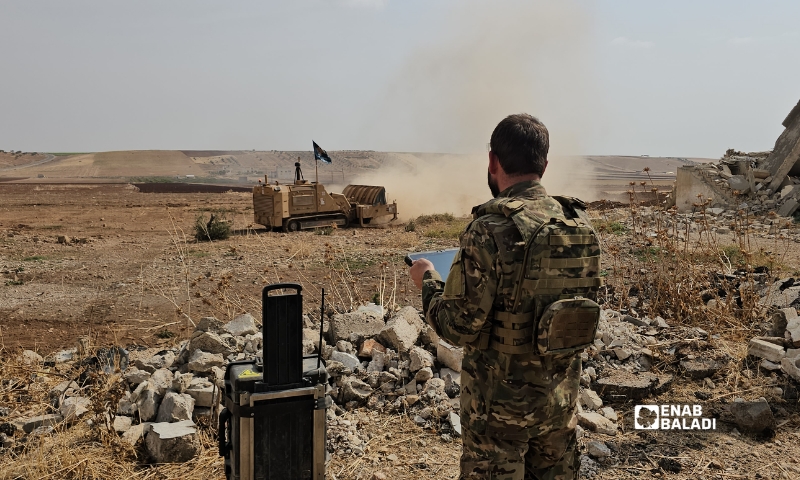
A Defense Ministry member clears mines and unexploded ordnance in al-Hamamiyat in the Hama countryside, October 12, 2026 (Enab Baladi/Eyad Abdel Jawad).
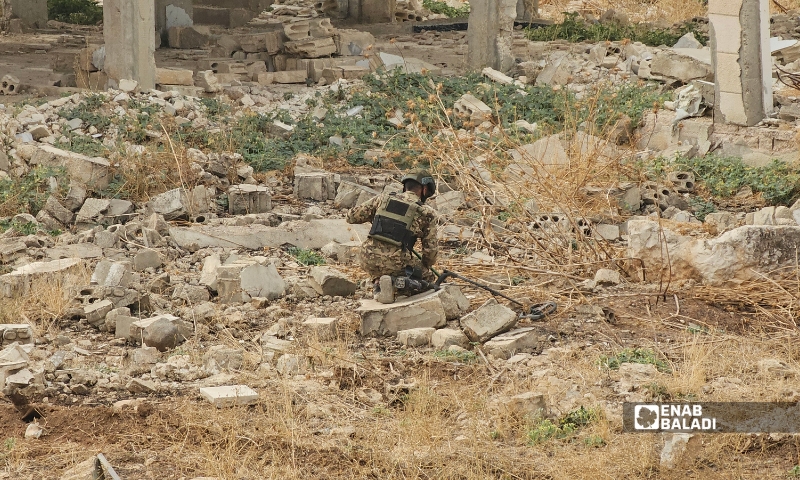
A Defense Ministry member clears mines and unexploded ordnance in al-Hamamiyat in the Hama countryside, October 12, 2026 (Enab Baladi/Eyad Abdel Jawad).
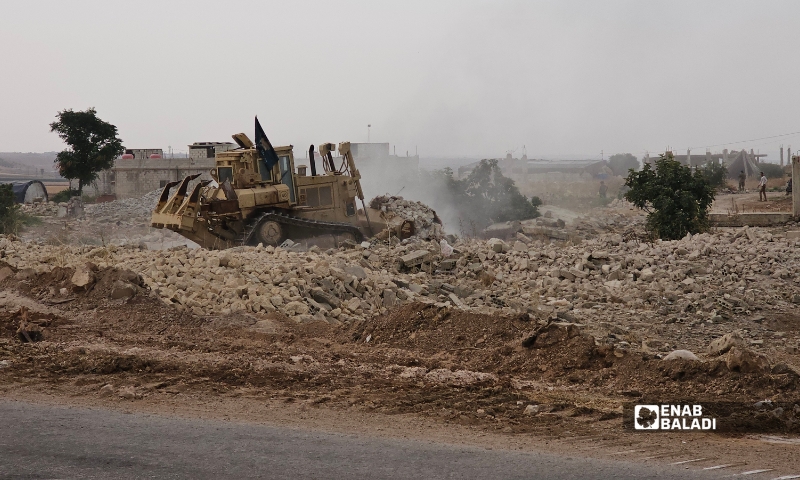
Defense Ministry mine-clearing vehicles remove mines and unexploded ordnance in al-Hamamiyat and surrounding areas in the Hama countryside, October 12, 2026 (Enab Baladi/Eyad Abdel Jawad).
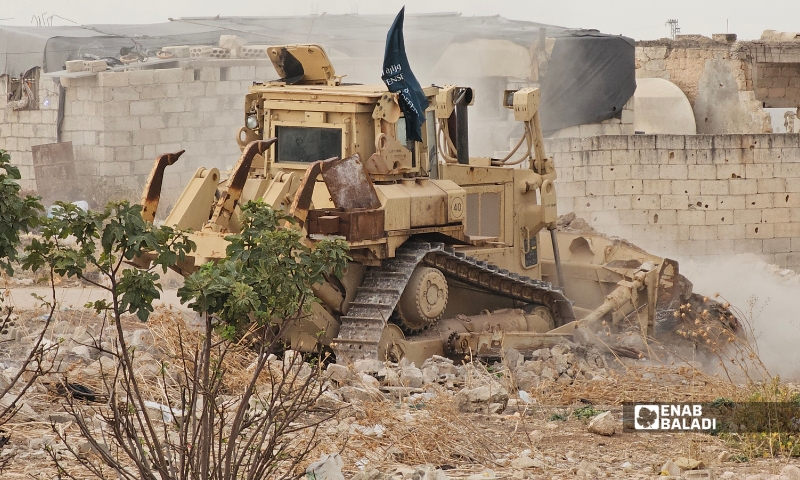
Defense Ministry mine-clearing vehicles remove mines and unexploded ordnance in al-Hamamiyat and surrounding areas in the Hama countryside, October 12, 2026 (Enab Baladi/Eyad Abdel Jawad).
Protest Demanding Mine Clearance
The Defense Ministry engineering teams’ work followed an earlier protest organized by al-Hamamiyat residents on October 3. They blocked the road at the village entrance, demanding stronger efforts to clear mines and explosive remnants of war and remove rubble after an eight-year-old boy was injured in a mine explosion.
The incident sparked residents’ anger and brought renewed attention to mines planted in residential neighborhoods, an issue that had remained neglected despite more than a year having passed since the area’s liberation, residents told Enab Baladi’s Hama correspondent.
A Child’s Injuries Spur Residents to Act
According to Enab Baladi’s Hama correspondent, the boy, a third-grade student, was injured in a mine explosion in al-Hamamiyat yesterday . He underwent limb amputations, and his condition at the hospital in Mhardeh (Hama governorate, central Syria) was described as unstable.
The correspondent added that the boy had three limbs amputated today his right hand, right foot, and left hand. He also suffered severe damage to his eyes, extensive facial disfigurement, failure of one lung, and severe bleeding in his stomach and intestines. He was on a ventilator, hovering between life and death.
Devices That Detectors Cannot Find
Civil activist Nawaf Ahmed al-Khader told Enab Baladi that the widespread presence of mines had made conditions in al-Hamamiyat tragic and impossible to remain silent about.
He said farmland and homes had become haphazard minefields, planted without regard for civilian lives. Three mines had previously exploded in succession at the site of yesterday’s incident, and the danger remained acute despite intervention by engineering teams.
Many of the planted mines are plastic antipersonnel devices that conventional detectors cannot detect, requiring highly trained specialist teams to remove them, according to al-Khader. He noted that the same location had seen repeated incidents: a man and his son were injured there several months earlier, and the same son was injured by another antipersonnel mine just two months later, before the latest incident involving the boy at that same site.
He said the danger from mines was no longer confined to agricultural land but had spread into infrastructure and sewage networks. He noted that, since its liberation a year and a half earlier, the area had lost one of its residents, who had lost his sight and suffered facial disfigurement Cars and tractors belonging to members of his family had also been destroyed in similar explosions.
Fear follows residents at every step. If a villager wants to build even a single room on the foundations of an old home, they dare not dig or go any deeper than the existing foundations for fear of the death buried underground, as civil activist Nawaf al-Khader described it.