
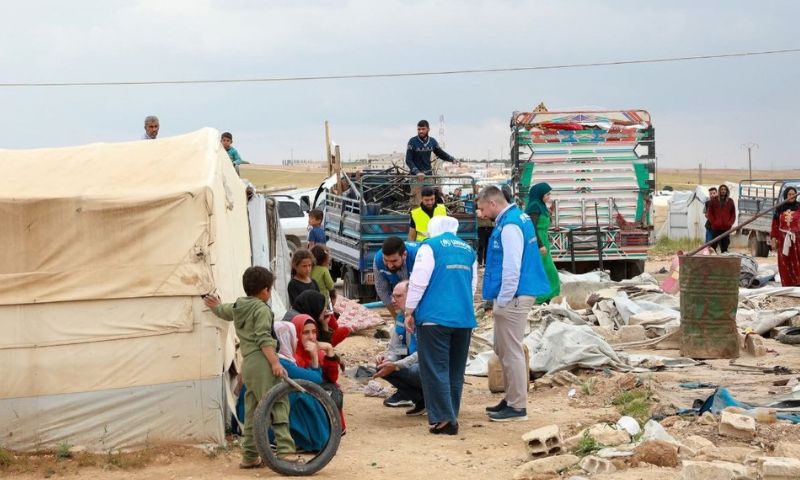

UNHCR, the UN Refugee Agency, reported that 87,345 people in refugee-hosting countries received return-related cash assistance in 2026, while 99,949 people inside Syria received cash assistance for return and reintegration, representing 27,085 returning families.
ReliefWeb, citing UNHCR, reported that the period following the political transition in Syria in December 2024 saw an increase in the number of refugees returning or expressing an intention to return, prompting the agency to expand its return and reintegration assistance.
In countries hosting Syrians, UNHCR provides a one-time cash grant of $100 per person who has decided to return voluntarily.
The most vulnerable families may also receive an additional $100 to $300 per household, based on needs related to disability, serious medical conditions, single-parent households, or child protection risks, according to UNHCR.
UNHCR said the assistance is intended to cover some of the direct costs associated with return, including transportation, documentation, luggage, food, housing expenses, and basic needs, but does not cover the full cost of returning.
Eligible returning families inside Syria can receive a one-time reintegration grant of $600.
According to UNHCR, around 70,000 families eligible for assistance are currently on a waiting list, while available funding can cover only about 37,500 families. The agency estimates that an additional $20 million is needed to provide cash assistance to returnees during the first months after their arrival.
Assistance Eases Return Costs
Monitoring conducted by UNHCR in countries across the region shows that cash assistance linked to return and reintegration helps refugees cover return expenses and their initial needs after arrival, without being a decisive factor in the decision to return.
In Jordan, more than 80% of surveyed beneficiaries said the grant was not the factor that determined their decision to return, but that it helped them overcome financial barriers associated with a decision they had already made.
During the pilot phase between September 2025 and March 2026, around 40% of returns from the Azraq and Zaatari refugee camps took place without UNHCR cash assistance, indicating that the aid facilitates return rather than prompting refugees to make the decision to return, according to the agency.
Monitoring results also show that transportation is the main use of the assistance in several countries.
In Iraq, all surveyed beneficiaries used the assistance to cover transportation costs to Syria, while more than 80% identified transportation as their largest return-related expense.
In Turkey, 96% of participants spent the assistance on transportation, while 93% said it enabled them to complete their return journey.
In Jordan, beneficiaries primarily spent the grant on transportation, basic needs, debt repayment, and initial settlement costs.
The findings also showed that the assistance helps ease financial pressure during the transitional period following return.
In Turkey, around 89% of respondents said the assistance moderately or significantly improved their ability to cover return expenses, while around 90% said stress levels within their households declined after receiving it.
Inside Syria, 96% of families included in post-distribution monitoring reported improved living conditions, while 94% said household stress decreased after receiving return and reintegration assistance.
The data also indicate that the assistance is reaching households facing greater financial constraints.
In Jordan, low-income households were the most likely to use the cash assistance, while only 30% of beneficiaries said the grant covered all or most of their return costs, reflecting its limited ability to cover return-related expenses in full.
According to UNHCR surveys, beneficiaries prefer receiving support in cash. Satisfaction with the assistance exceeded 98% in Turkey, while 97% of beneficiaries said they preferred receiving it in cash.
Inside Syria, 99% of surveyed families said they preferred cash assistance because it gives them greater flexibility to direct spending toward their most urgent needs.