

The Syrian Energy Ministry has reorganized diesel prices in the market, days after raising the price of a liter to 175 new Syrian pounds (about $1.43), introducing three categories with different prices and specifications. These include subsidized diesel at 115 Syrian pounds (about $0.94) per liter, alongside a decision to restart several local refineries, including electric refineries in northeastern Syria.
The decision comes as Syria faces growing pressure in the fuel market due to rising costs of securing petroleum products, the Baniyas Refinery undergoing maintenance, and protests in several Syrian areas following increases in fuel prices.
According to the Energy Ministry, all diesel produced by the local refineries being brought back into operation will be allocated to the subsidized category priced at 115 Syrian pounds (about $0.94) per liter, designated for heating, agriculture, and eligible recipients. Another category will be sold at 150 Syrian pounds (about $1.23) per liter for some production and service uses and for engineering and heavy machinery, while standard specification diesel will be sold at 175 Syrian pounds (about $1.43) per liter.
The targeted capacity of the local refineries is 35,000 barrels of crude oil per day. They will operate under the management and supervision of the Syrian Petroleum Company, according to an announcement by the ministry on September 17.
Three Diesel Prices
The decision to introduce multiple diesel prices came days after the official price was raised from 125 Syrian pounds (about $1.02) to 175 Syrian pounds (about $1.43) per liter. The Energy Ministry said the increase was linked to the higher cost of securing petroleum products on global markets, coinciding with the Baniyas Refinery beginning a comprehensive maintenance overhaul expected to last about two months and the resulting increased need to import finished petroleum products.
On September 17, the ministry announced the adoption of three categories of diesel based on their use and specifications.
The first category was set at 115 Syrian pounds (about $0.94) per liter and allocated to heating, agriculture, and eligible recipients. The second was set at 150 Syrian pounds (about $1.23) per liter for production and service uses and engineering and heavy machinery, while standard specification diesel remained priced at 175 Syrian pounds (about $1.43) per liter.
Energy Minister Mohammed al-Bashir said the government had decided to allocate all diesel produced by local refineries to supplying the subsidized category priced at 115 Syrian pounds (about $0.94). Distribution will be organized in coordination between the Syrian Petroleum Company, governorates, and relevant authorities to ensure that the fuel reaches eligible recipients.
al-Hasakah Refineries Emerge From Years of War
The history of local refineries in al-Hasakah (northeastern Syria) dates back to the years after government institutions withdrew from most oil fields in the region and the Autonomous Administration took control of large parts of northeastern Syria.
The Rmeilan and al-Suwaydiyah fields were among the region’s most important oil sources, while the disruption of pipelines carrying oil to the Homs and Baniyas refineries prompted a search for local ways to refine crude oil and provide petroleum products to residents.
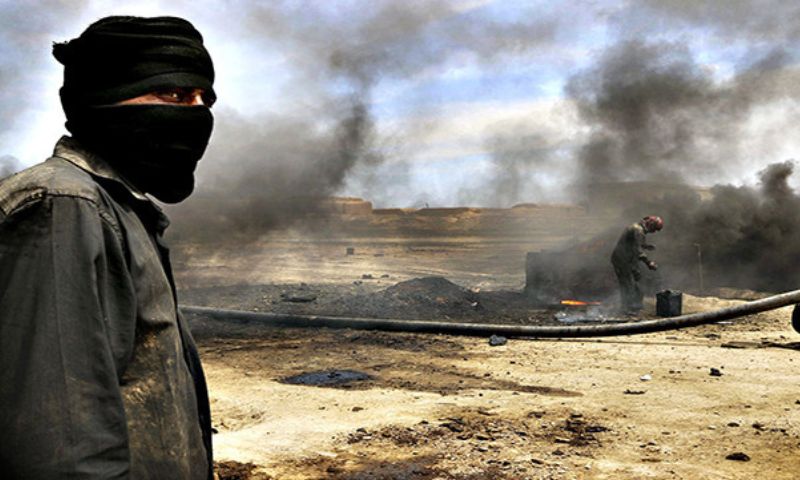
During the war years, primitive refineries appeared across several areas in the Hasakah countryside and Deir Ezzor (eastern Syria). Known locally as “harraqat,” they relied on heating crude oil inside metal basins and tanks to extract gasoline, diesel, and kerosene.
These primitive refineries began spreading during a period when armed factions controlled several oil wells in 2012. After taking control of the Rmeilan fields, the Autonomous Administration moved to eliminate the primitive refineries and replace them with refineries powered by electricity.
At a later stage, the Autonomous Administration relied on primitive refineries to meet the fuel needs of areas under its control before the local refining system in al-Hasakah developed further. The Rmeilan fields contained extensive oil infrastructure, which the Autonomous Administration operated and used to benefit from their production.
From Primitive Refineries to Electric Refineries
The development of electric refineries was intended to locally supply part of the region’s demand for petroleum products amid difficulties transporting crude oil to government refineries on the coast, particularly given the troubled relationship between the Syrian Democratic Forces, or SDF, and the former regime.
The disruption of roads and transport pipelines connecting the area to refineries pushed the Autonomous Administration to rely on local refining. More advanced refining facilities later emerged compared with the primitive harraqat.
Al-Jazira company, which was linked to managing the region’s oil sector, imported equipment and spare parts for electric refineries with the aim of increasing local oil refining.
The main facilities associated with local refining are concentrated around the Rmeilan, al-Suwaydiyah, and Krezero, or Tal Adas, oil fields.
In previous years, these facilities formed part of a local economic and service system that relied on oil extracted from the region’s fields to provide the petroleum products needed for transportation, generators, bakeries, and some service sectors.
Refinery Shutdown Triggers al-Hasakah Diesel Crisis
The importance of these facilities resurfaced in August, when supplies of crude oil to local refineries stopped, halting production of diesel quantities that had been allocated for service uses in al-Hasakah governorate.
On August 30, the governorate experienced a complete cutoff of diesel for service sectors after crude oil supplies to local refineries stopped. Those refineries had depended on the crude to produce diesel allocated to public transportation, shared minibuses, private “ampere” generators, bakeries, mills, and other service facilities.
According to a source at the al-Hasakah Fuel Directorate, the governorate had been receiving about 3,000 cubic meters of crude oil per day, which was sent to local refineries and produced about 19 tanker loads of diesel daily for service uses.
The suspension of crude supplies came as the oil supply mechanism used by Al-Jazira Oil Services Company expired, coinciding with the transfer of management of the oil fields to state institutions.
The mechanism had been tied to temporary arrangements for distributing oil production before those arrangements expired.
Refineries Restart Before 115 SYP ($0.94) Decision
Before the Energy Ministry announced the three diesel categories, some local refineries in al-Hasakah had already resumed operations.
On September 10, local sources reported the restart of refineries and refining units at the Krezero, or Tal Adas, and al-Suwaydiyah fields after they had been out of operation since August.
The refineries and primitive harraqat in Krezero and al-Suwaydiyah were permitted to operate for six months under specified quantities and production ratios through an agreement with the Syrian Petroleum Company. Sources also spoke of the possibility of extending Al-Jazira company’s contract for six months, although this had not been officially announced at the time.
The restart in al-Hasakah came before the Energy Ministry announced on September 17 that local refineries across Syria would be brought back into operation and that all of their diesel production would be allocated to the category priced at 115 Syrian pounds (about $0.94).
The local refineries in al-Hasakah have therefore become part of the government’s broader diesel policy after having been primarily linked in previous weeks to the fuel crisis in northeastern Syria.
Expert: Refineries May Temporarily Supply Cheapest Diesel
Economist Mohammad Al Abdallah told Enab Baladi that restarting local refineries could temporarily help supply diesel for the category priced at 115 Syrian pounds (about $0.94), particularly because the Energy Ministry has directly linked the output of these refineries to this category.
Abdullah said the importance of the measure at the current stage lies in providing a local source of diesel rather than relying entirely on imported petroleum products. Operating local refineries could help provide quantities of subsidized diesel while major refineries are undergoing maintenance or when the market requires additional sources, he said.
He added that refineries in al-Hasakah have the advantage of being located close to crude oil production areas, reducing the need to transport crude over long distances before refining it. However, the quantity that can reach the market will remain dependent on the refineries’ actual capacity, the quality of the crude, and the proportions of petroleum products produced during refining.
Abdullah said describing the refineries as a temporary solution does not mean they can meet Syria’s diesel needs on their own. Instead, they can form part of the supply system during the current period, with their impact determined by production quantities and the distribution mechanism.
He added that the difference between subsidized diesel at 115 Syrian pounds (about $0.94) and standard diesel at 175 Syrian pounds (about $1.43) makes the distribution mechanism a key element in implementing the decision, particularly because the ministry designated the cheaper category according to specific uses and eligible recipients rather than setting it as a uniform price for all consumers.
New Phase for Syria’s Refining Sector
The Energy Ministry’s plan places local refineries in a new phase after years in which local refining across different parts of Syria was associated with primitive harraqat, particularly in areas that had fallen outside the former regime’s control.
al-Hasakah differs from some other primitive refining sites in the country, however. During the period of Autonomous Administration control, the region saw a shift from traditional harraqat to electricity powered refining facilities in an effort to provide petroleum products locally.
Today, these facilities are returning to operation under the management and supervision of the Syrian Petroleum Company, according to the Energy Ministry, with the stated goal of producing diesel allocated to the subsidized category priced at 115 Syrian pounds (about $0.94).