

Enab Baladi –Mohammad Deeb Bazzet
Syrian President Ahmed al-Sharaa’s remarks in a recent television interview have opened debate over the future of relations between Syria and Israel. Al-Sharaa said indirect negotiations were underway to prevent escalation and that Syria was seeking to recover its rights through political and diplomatic means.
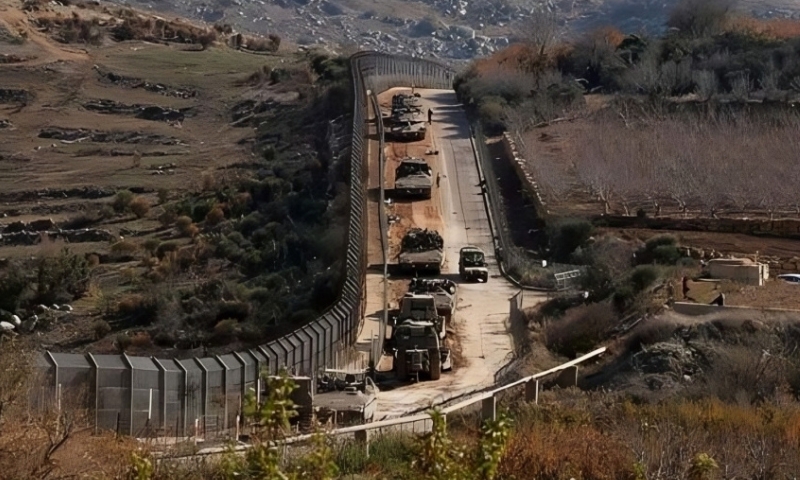
Since the fall of the Assad regime, Damascus and Tel Aviv have engaged in indirect contacts focused primarily on security in southern Syria, amid Israeli incursions into Syrian territory.
The talks have addressed the possible reactivation of the 1974 Disengagement Agreement to regulate the border and prevent escalation, as well as the withdrawal of Israeli forces from areas they entered after the regime’s fall.
Syrian Foreign Minister Asaad al-Shaibani has spoken on several occasions about negotiations with Israel under US sponsorship. He said Damascus was seeking an agreement that would safeguard Syria’s sovereignty and rights, rather than understandings detached from the country’s national concerns.
President al-Sharaa’s latest remarks coincide with political and security changes across the region. They raise questions about the nature of any potential understandings between Damascus and Tel Aviv, the limits of what Syria might accept politically, and whether the statements reflect a change in how the Israeli file is being managed or form part of a political approach linked to the transitional period and current regional balances.
Discussion of the issue also invites a broader examination of the challenges that could confront any future negotiating process, both within Syria and amid regional and international calculations surrounding the Arab-Israeli conflict.
The Need for a Moderate Discourse
Writer and political researcher Darwish Khalifa said al-Sharaa’s comments about the possibility of reaching a security agreement with Israel, which might later develop into a peace agreement, come at a time when Syria must adopt a “centrist and moderate” discourse, given repeated Israeli attacks on Syrian territory and continuing military incursions.
Khalifa told Enab Baladi that Syria’s current circumstances do not allow it to adopt an escalatory position toward Israel, particularly because the structure of the Syrian army remains incomplete and the country faces internal security vulnerabilities. Regional powers are also preoccupied with other issues, especially developments related to Iran and the region’s maritime corridors and crossings.
He added that Syria does not currently possess a balance of power comparable to Israel, which has advanced military and technological capabilities. This makes military confrontation unrealistic under present conditions and requires a conciliatory discourse aimed at securing the greatest possible political and security gains.
According to Khalifa, Syria’s immediate priority should be to halt Israeli attacks and secure Israel’s withdrawal from the areas into which it has advanced. He noted that Israel’s approaching Knesset elections in the coming months have made hardline rhetoric dominant as political actors seek votes from right-wing and extremist constituencies.
Political Legitimacy
Khalifa said discussion of a security agreement does not necessarily mean moving directly toward a comprehensive peace agreement. Such processes could develop gradually over several years in accordance with Syria’s national interests and the requirements of the Syrian cause.
A political agreement of this scale cannot be decided by the current authorities alone. It would require political legitimacy and elected institutions, including an elected parliament capable of voting on and ratifying such agreements.
Khalifa stressed the need to consult Arab countries, particularly Egypt, Jordan, and Saudi Arabia, as well as regional allies, foremost among them Turkey, before taking any steps concerning relations with Israel.
US pressure is pushing the Syrian authorities to develop relations with Israel, while broad public opposition remains toward any form of normalization. Khalifa said this requires consideration of the various political and popular factors involved.
The future shape of relations between Syria and Israel will remain linked to the outcome of regional transformations, particularly the final results of the war involving the United States, Israel, and Iran, which will help define the region’s emerging balance of power.
State Terrorism
Political analyst Ahmed Qassem said al-Sharaa’s statements about the possibility of reaching a security agreement with Israel reflect a realistic assessment of the political and security changes affecting the region amid instability caused by regional tensions and repeated military interventions.
Qassem told Enab Baladi that the region faces major security challenges, including the influence Iran exercised over previous years, repeated Israeli incursions, and violations of Syrian sovereignty. He described Israel’s military operations inside Syrian territory and its interventions in the affairs of regional countries as “state terrorism.”
According to Qassem, any security agreement that restores the framework of the 1974 Disengagement Agreement could help calm the region. He said Syria has sought stability and peace during the current transitional period to enable it to begin reconstruction.
Qassem said President al-Sharaa had been clear that achieving peace would not mean relinquishing Syria’s rights in the occupied Golan Heights. Any discussion of peace with Israel, he added, must take place within a framework that safeguards Syria’s national rights.
Establishing Stability
According to Qassem, the current discussion is not about normalizing relations in the conventional sense. Instead, it is intended to establish stability and prevent Israeli attacks on Syrian territory.
He said the main political and security gains from such an agreement would be securing Syria’s borders and stopping Israeli incursions, which would positively affect stability across the region and limit interference in Syrian affairs.
Any future negotiations would primarily address security issues. Foremost among them would be Israel’s complete withdrawal from the Syrian territories it entered after the fall of the Assad regime, along with security arrangements designed to prevent future interventions.
Qassem said the issue of Israeli withdrawal cannot be separated from any potential agreement because it constitutes the basis of the negotiating process, a point President al-Sharaa has emphasized on several occasions.
A peace agreement, should one be proposed in the future, would require elected legislative institutions, constitutional procedures, and popular referendums, according to Qassem. He stressed that current discussions are limited to a security agreement and that any security accord between Syria and Israel would have broad implications for regional stability and economic growth.