
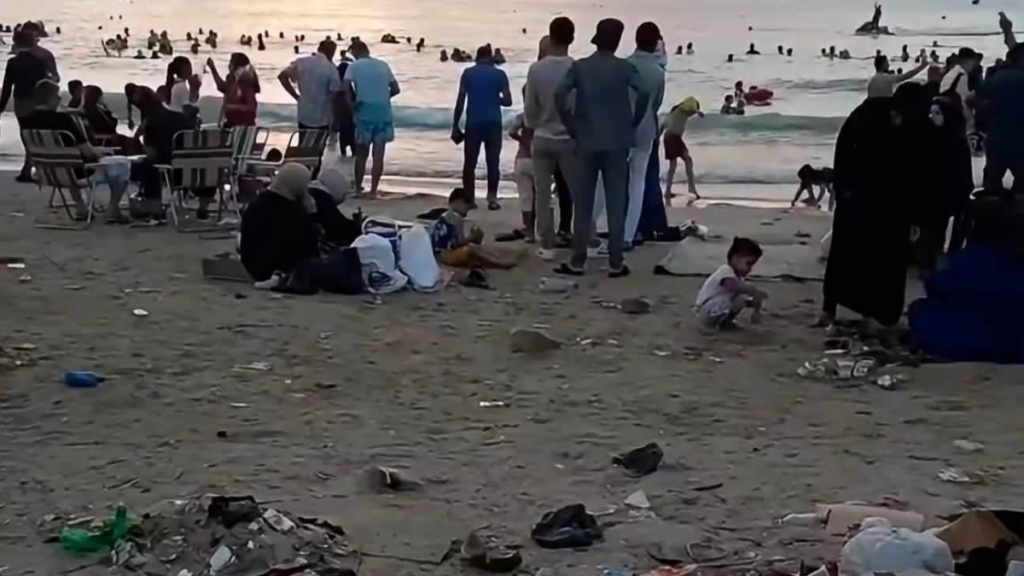

Lattakia, Yazan Kur
Every summer, the beaches of Lattakia (western Syria) become the leading destination for thousands of Syrians seeking free or low-cost recreation. Public beaches are no longer merely a seasonal destination, but have become a primary space for daily leisure for a broad segment of families that increasingly prefer open areas to more expensive tourism options.
This shift has increased visitor numbers at some sites and intensified pressure on the beaches and the services available there, especially on weekends and during peak tourism periods.
Yet the scene, which should reflect the atmosphere of a summer holiday, includes conditions that have frustrated visitors. Families crowd onto public beaches amid widespread waste, the absence of some basic services, and practices that many believe threaten the safety of families and other visitors, including motorcycles and vehicles entering areas around swimming and recreation sites.
Amid rising demand for these spaces and weak organizational measures, questions are again being raised about the management of public beaches and whether the relevant authorities can maintain their cleanliness and provide visitors with a safe environment during the peak tourism season.
Visitor Complaints
Complaints from visitors to Lattakia’s beaches range from cleanliness and services to safety concerns. Many believe that heavy pressure on public beaches has exposed problems that recur every summer without adequate solutions.
Ahmed Sahyouni, 39, told Enab Baladi that declining cleanliness has become one of the most noticeable problems for visitors. He said accumulating waste at some sites diminishes the enjoyment of time spent at the beach and creates a negative impression of the area, although the beach is the only recreational outlet available to many families.
Siham Soufi, 41, said she worries about her children walking barefoot on the beach because discarded materials or sharp objects, such as broken glass or pieces of metal, could injure them. She said keeping the beach clean is not only connected to its general appearance, but is also essential to providing a safe environment for beachgoers, particularly children.
Visitors’ complaints are not limited to accumulating waste. Several Lattakia residents and beachgoers told Enab Baladi that they also face a shortage of public toilets, an absence of waste containers at some sites or containers filling quickly during holidays, weak monitoring of littering, and vehicles and motorcycles entering areas close to swimming and seating locations.
They said these problems recur every summer despite repeated promises to improve services.
Measures to Address Pollution
As visitors continue to complain about cleanliness and services on the beaches, the Coast Guard Directorate, part of the General Directorate of Ports, announced that it had documented an environmental violation at Ras al-Basit Beach (Lattakia governorate, western Syria). The violation involved sewage being discharged from a building toward a beach designated for swimming.
The directorate said it documented the violation and took legal action against the offender, requiring the source of pollution to be removed urgently. It also confirmed that its monitoring campaigns would continue along the Syrian coast to identify environmental violations.
In the same context, Lattakia City Council told Enab Baladi that it had instructed the Sanitation Directorate to conduct a campaign in the area. The campaign included supplying the beach with new waste containers as part of efforts to reduce pollution and improve cleanliness.
The council added that the problem was not linked to municipal services alone, but also to the behavior of some investors and beachgoers. It said sanitation teams conduct daily field visits and continually warn violators, while penalties will begin once the procedures required to implement them are completed.
Lattakia’s beaches continue to face the challenge of balancing growing visitor numbers during the summer season with the need to improve services and strengthen monitoring to protect visitors and the marine environment.