
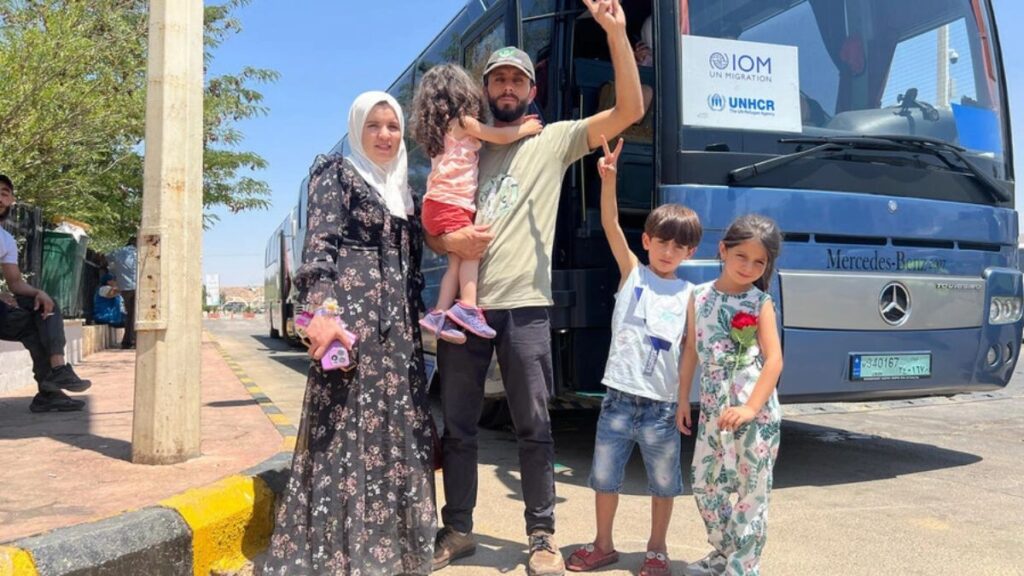

A study by the International Rescue Committee revealed that millions of Syrians are returning to areas that lack water, electricity, and other basic services.
The committee said on Monday, July 6, that more than 3.5 million Syrians have returned home since the fall of the Assad regime in December 2024, making it one of the largest ongoing return movements in the world today. It noted that most returnees are arriving to disrupted services, damaged housing and conditions worse than expected.
It added that the systems designed to support them are not keeping pace with this growth, forcing returnees to rebuild their lives in communities that lack water, electricity, functioning schools and adequate health services.
The report, which was based on survey data, group discussions and interviews with experts in seven governorates, concluded that nine out of every ten returnees arrived to find basic services unavailable.
It showed that 71% of returnees live in damaged housing, with little organized support to repair or rebuild it.
Only 18% reported receiving sufficient support during the return journey itself, while 44% found conditions upon arrival worse than they had expected. The research found that many returns were not truly voluntary.
A large segment of those who returned said the decision was driven by worsening displacement conditions, the erosion of legal status in host countries and deteriorating security conditions, as in Lebanon, which is witnessing armed conflict.
The committee noted that the lack of services is not limited to failing to meet basic needs, but also creates conditions for social tensions. It stressed that the tensions documented most consistently between communities were not identity-based divisions, but clear disparities in aid distribution.
Creating Conditions for Safe Return
Eatizaz Yousif, director of the International Rescue Committee’s Syria office, said investing in the conditions needed for safe, voluntary, dignified and sustainable return is not only a humanitarian duty, but also an opportunity to harness the energy, skills and determination of millions of Syrians who want to play a central role in rebuilding their country and shaping a more prosperous future. She said this is an opportunity that should not be missed.
The committee called on the Syrian government, international donors, host countries, and humanitarian and development actors to act urgently on five priorities, including:
- Investing in service delivery that reaches entire communities, not only returnees, to reduce competition and build social cohesion.
- Funding humanitarian, development and peacebuilding programs simultaneously.
- Maintaining sustainable solutions, including resettlement, for those who still cannot return safely.
- Providing flexible, multi-year core funding for local civil society organizations and women-led organizations.
- Allocating dedicated funding sources for psychosocial support, social cohesion and peacebuilding.
Incentives for Returnees
Data from the United Nations High Commissioner for Refugees indicates that around 1.6 million Syrians have returned from abroad to their country since December 8, 2024, in addition to around 1.9 million internally displaced people who returned to their areas of origin.
Refugees from neighboring countries make up the largest share of returnees, while European countries have not recorded similar numbers.
Host countries are encouraging Syrians to return, with financial incentives being offered to those willing to go back.
The Austrian government had announced the launch of a temporary initiative to encourage Syrian refugees to return voluntarily to Syria.
The initiative included financial incentives of up to 3,000 euros per person, during the period from July through next September.
Austrian Interior Minister Gerhard Karner said the initiative comes as part of support for Syrians’ voluntary return following the political developments Syria witnessed in the past period.
Karner noted that around 2,000 Syrians have left Austria since the change of power in Damascus around a year and a half ago, either voluntarily or through deportation procedures.
The German government is also studying incentives to encourage Syrian refugees to return voluntarily to Syria.
Government sources told Germany’s Focus Online newspaper that the Federal Ministry of the Interior is currently considering granting Syrian refugees a return bonus of up to 8,000 euros.
The report indicates that returning refugees so far receive support of up to 1,000 euros to start a new life in Syria.