
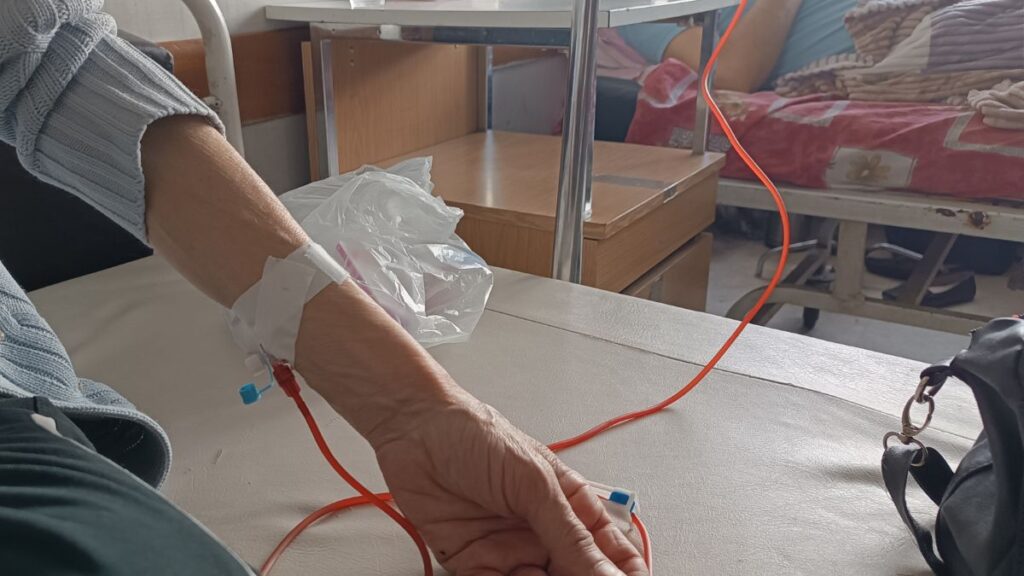

Cancer care in Syria is facing growing challenges, with thousands of cases recorded each year amid shortages of equipment and medical expertise needed to handle complex cases, especially among children.
The Ministry of Health is seeking partial external solutions in cooperation with Jordan, including referring critical cases for treatment and sending medical staff for training, in a step aimed at filling some gaps in the sector and strengthening treatment capacity inside Syria in the future.
Jamil al-Dabl, director of the Cancer Diseases Department at the Ministry of Health, told Enab Baladi that the number of cancer cases among children in Syria reaches about 1,100 annually, while the total number of cancer cases ranges between 17,000 and 20,000 a year.
He said most cases are leukemia patients, attributing this to the weapons used during the war in Syria, whether chemical or otherwise.
Referring Patients to Jordan
During a visit to Syria by Jordanian Health Minister Ibrahim Al-Badour, accompanied by several Jordanian health sector officials, including the director of King Hussein Cancer Center, discussions addressed the possibility of sending several Syrian oncology patients to the hospital for treatment, especially cases that cannot be treated inside the country.
Al-Dabl said an agreement was reached with the Jordanian side on two tracks. The first concerns determining the type of cases that will be referred for treatment, while the second involves sending Syrian medical, nursing, and technical staff to King Hussein Cancer Center for training.
Regarding the cases covered by the agreement, he explained that they include patients who need bone marrow transplants, in addition to some leukemia cases, because this type of treatment is unavailable in Syria due to a shortage of specialized expertise.
He said the number of cases in Syria that require bone marrow transplants is estimated at 150.
Al-Dabl said an agreement was reached with King Hussein Cancer Center’s administration on specific criteria for patient referrals, including that the percentage of tumor cells should not be high and that there must be a bone marrow match between the patient and donor, whether a brother, sister, or parent, to ensure the highest chances of treatment success.
He added that some of these cases had previously been sent to Jordan for treatment at the beginning of the current year.
As for medical staff, al-Dabl said training missions will be sent to the oncology hospital in Jordan to gain experience in several fields, including bone marrow transplantation, as well as about ten medical specialties that are unavailable in Syria. The missions will be sent in batches.
He said the goal of the step is to localize these forms of expertise inside Syria, reducing the need to send patients abroad for treatment in the future.
Challenges Hindering Implementation
At the same time, al-Dabl pointed to challenges that hinder rapid implementation of the agreement, most notably the need for financial support.
He said procedures at the Jordanian hospital are not free, as the cost of a bone marrow transplant ranges between $50,000 and $100,000. Training medical staff will also not be free, and its cost could reach about $1 million.
He added that after the Jordanian side determines the required costs, the Ministry of Health will announce a project to cover the expenses by requesting support from various parties, such as international organizations, the World Bank, and others.
At the end of his remarks, he said the Ministry of Health had previously approached several countries and international organizations to seek support in this field, but those efforts did not yield results.
Rising Death Rates
On December 18, 2024, the BMC research portfolio published a systematic review of cancer and conflict in Syria, including most studies that addressed cancer and cancer control in Syria. The review reached several findings, most notably:
- The cancer death rate in Syria increased by 31.7% compared with 2015, with an overall mortality rate of 89.6 deaths per 100,000 people in 2022.
- The cancer incidence rate in Syria increased by 40% compared with 2015, with an overall rate of 135.7 cases per 100,000 people in 2022.
Cancer treatment costs in Syria range between $100 and $1,000 a month, which was reported to be extremely expensive for the average Syrian citizen, according to a study conducted in 2016.